
From Blueprint to Living Space: How We Document Smart Building Installations Across Cyprus
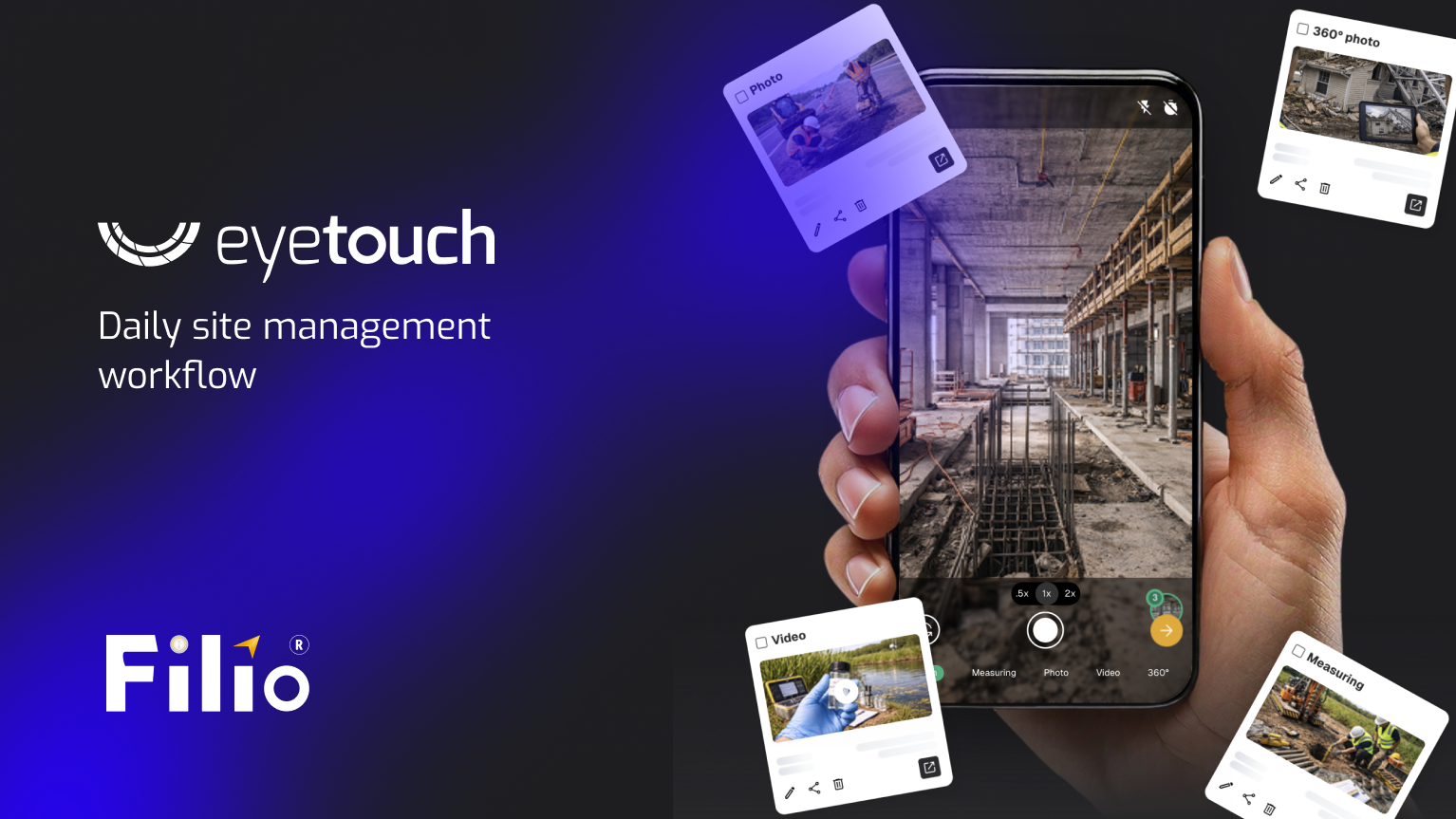
Walk into a finished eyetouch project and the technology feels almost invisible: lighting responds naturally, climate systems work quietly, and controls blend into the architecture. Behind that experience is a complex network of cabling, sensors, control modules, distribution boards, and coordinated installation work.
Once walls and ceilings close, much of this infrastructure disappears from view. A small site adjustment can then be difficult to reconstruct during commissioning, maintenance, or a future upgrade. To preserve that information and improve collaboration, our engineering team integrated Filio into our visual field documentation and reporting workflow.
The challenge: keeping field information connected
Photos on personal phones, updates in group chats, and notes written at the end of the day may show that work happened, but they rarely preserve enough context. A cable-route photo is far less useful when the room, date, direction, installation phase, or related observation is missing. Fragmented records also make off-site review and client reporting slower: teams must search across devices and messages, confirm details, and rebuild the story manually.
We needed one workflow connecting field capture, technical context, retrieval, review, and reporting without adding unnecessary administration for technicians.
Why Filio fits the eyetouch workflow
Filio is an AI-powered visual documentation and field reporting platform for site-based teams. Its mobile Data Collector and web application connect photos, videos, 360-degree visuals, notes, measurements, maps, plan sheets, metadata, search, and reporting. Records can be organized by project and location and enriched with capture time, GPS location, direction, photographer, weather, tags, and AI-assisted captions. Project-specific AI prompts can also support consistent captions, labels, and summaries, while our team reviews and approves the technical content.
How we use Filio during an installation
Recording concealed work before walls close
During first-fix work, technicians capture cable routes, back boxes, sensor locations, control infrastructure, and other concealed elements. Photos and videos can be connected to project maps or plan sheets and retained with location and directional context. If an installation changes around a structural element or another building service, the updated condition can be documented while it is still visible.
This creates a durable visual reference for what was observed and where. It complements approved drawings, survey information, and formal as-built documentation; it does not replace them.
Adding technical and spatial context
Typing long notes on an active site is rarely practical. With Filio, field teams can attach multilingual voice-to-text notes, annotations, markups, and sketches directly to the relevant visual record. An engineer can explain what was checked, what changed, or what needs attention without separating the observation from the evidence.
For equipment rooms, cinema racks, distribution boards, and other dense spaces, connected Ricoh and Insta360 cameras can capture immersive 360-degree photos and videos. These records preserve the relationship between equipment, routes, access points, and surrounding conditions, supporting clearer remote review and future troubleshooting.
Finding records and creating reports
Documentation has long-term value only when it can be retrieved. In the Filio web app, teams can search visual records using metadata, timeline, location, map context, and geofence history. This helps us move from a general project view to the relevant room, phase, date, or asset without searching through folders and message threads.
Selected records can then become personalized, interactive field reports organized by area, date, phase, or another project structure. Reports can be shared with stakeholders or exported to PDF or Word. Comments, approval workflows, and an audit trail keep review activity connected to the report and provide a clearer record of what was shared and approved.
What this means for owners and project partners
Greater transparency. Owners and project partners receive clearer updates on work that will eventually be hidden behind the finished architecture.
More informed coordination. Architects, project managers, and technical specialists can review visuals with location, time, and installation context, making questions and decisions more specific.
A stronger long-term reference. Authorized team members can retrieve relevant records for handover, maintenance, upgrades, or changes instead of relying on one technician's memory or personal device.
Building intelligence starts with disciplined documentation
At eyetouch, intelligent living begins with careful design, coordinated installation, thorough verification, and documentation that remains useful after handover. By connecting field capture, map and plan context, technical notes, 360-degree visuals, search, review, and reporting, Filio helps preserve the story of an installation from the first cable route to the finished living space. It supports the standard we aim to deliver across Cyprus: thoughtful engineering, clear collaboration, and long-term confidence.
Explore Filio or contact eyetouch about a smart building project in Cyprus.